2026 Annual Symposium
The Jane Coffin Childs Fund for Medical Research convened in sunny Seattle at the end of April for the 2026 Annual Symposium. JCC fellows, advisors, alumni, and staff gathered on the idyllic shore of the Puget Sound for a few days of excellent science and camaraderie.
The weekend kicked off with a reception at the Seattle Aquarium for hors d’oeuvres and petting tide pool creatures (two separate activities – no Seattle Aquarium animals were consumed during the symposium).
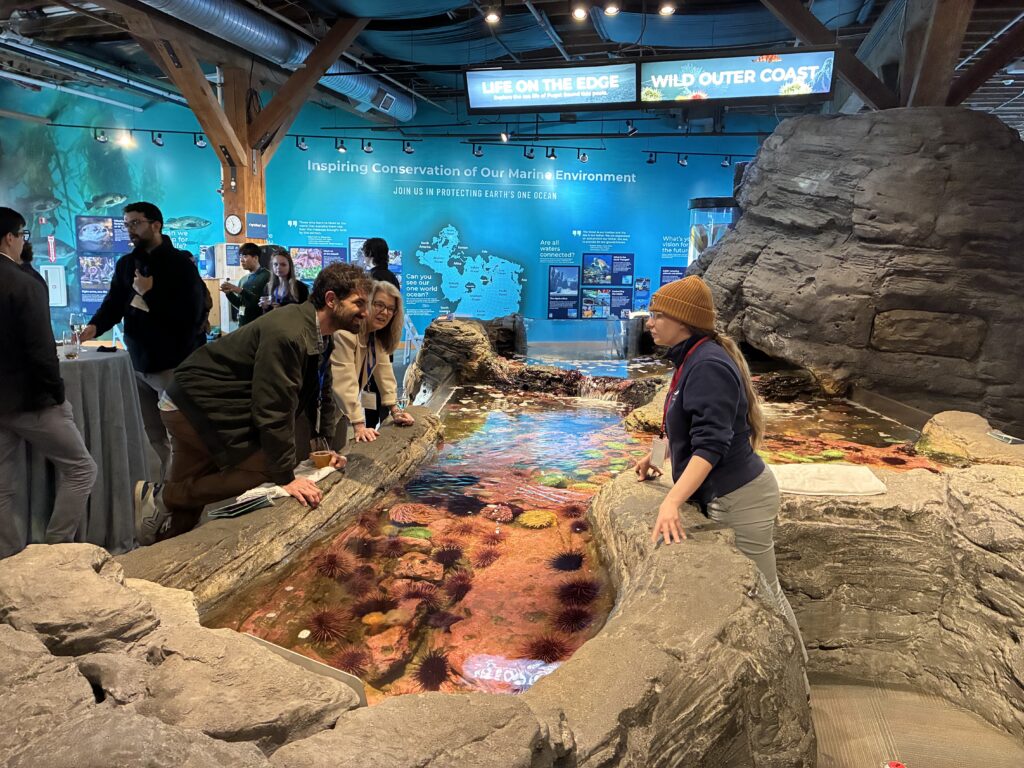
Dr. Tomer Milo checks out the Seattle Aquarium tide pools.
Afterwards, the JCC community was treated to dinner and a captivating keynote lecture by Dr. David Baker, Professor at the University of Washington and Director of the Institute for Protein Design. Baker is a luminary in the field of computational protein design and has deservedly received a wide range of awards recognizing his research, including the 2024 Nobel Prize in Chemistry. We’ll dive deeper into this lecture and Baker’s lecture and research in a subsequent blog post.
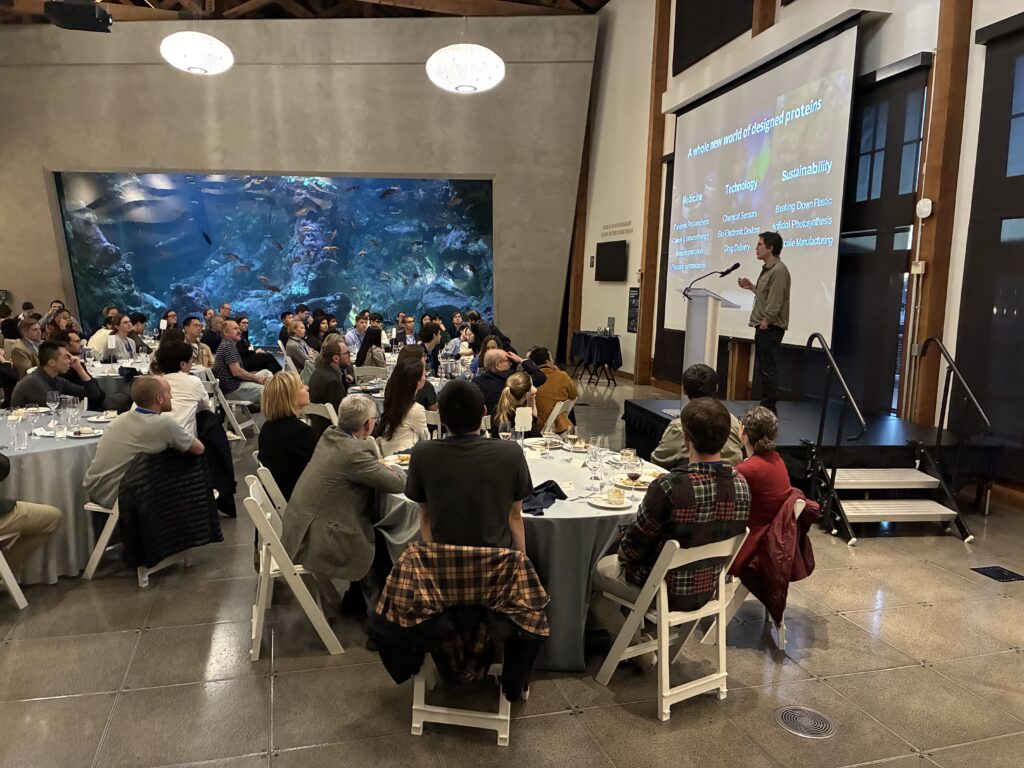
Dr. David Baker keynote lecture.
Fellows’ Presentations
The next day kicked off many sessions packed full of fantastic science talks from 3rd year fellows and poster presentations by 1st and 2nd year fellows. JCC Fellows present their broad-ranging research from molecular biology to neuroscience, ecology to medicinal chemistry, and more. In comparison, many scientific conferences tend to be focused on a very niche scientific subfield. The breadth of science at the symposium provides a fertile environment for the cross pollination of ideas across disciplines, often yielding a fresh and unique approach that can be used to tackle the problem at hand.
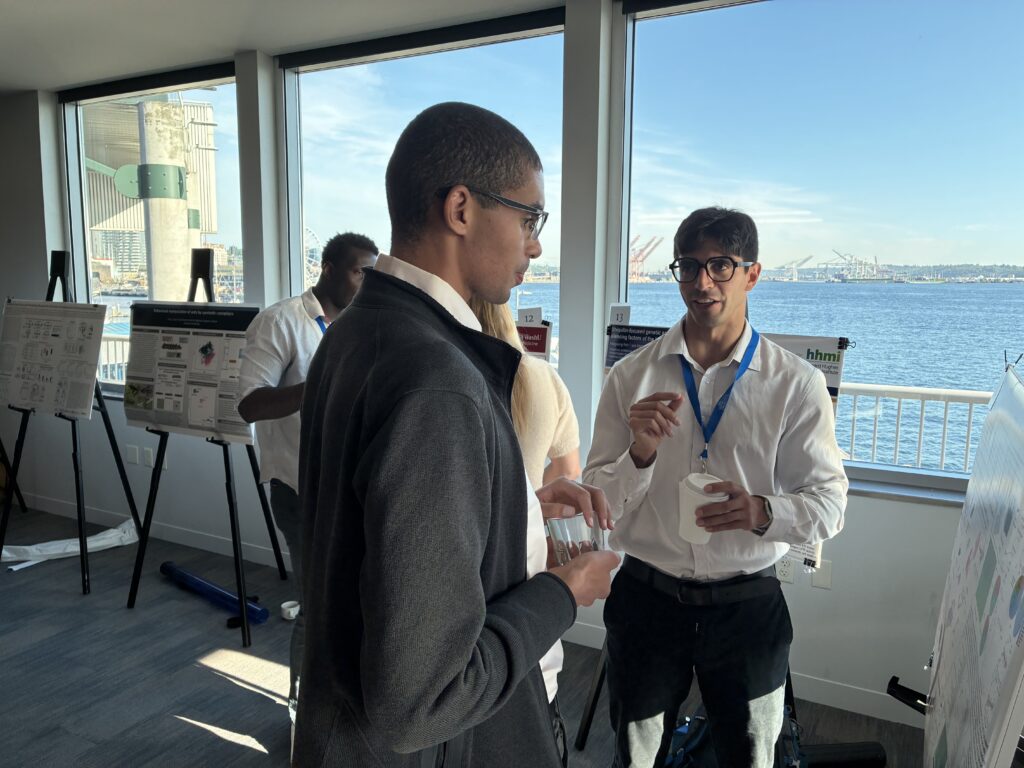
JCC Fellows Dr. Julian Braxton and Dr. Daniel Richard discuss the finer points of aging neural stem cells.
A common theme throughout the 3rd year presentations was how much feedback at previous JCC symposia had impacted the trajectory of their projects. A key suggestion here, new insight there, and in some cases brainstorming completely new projects altogether.
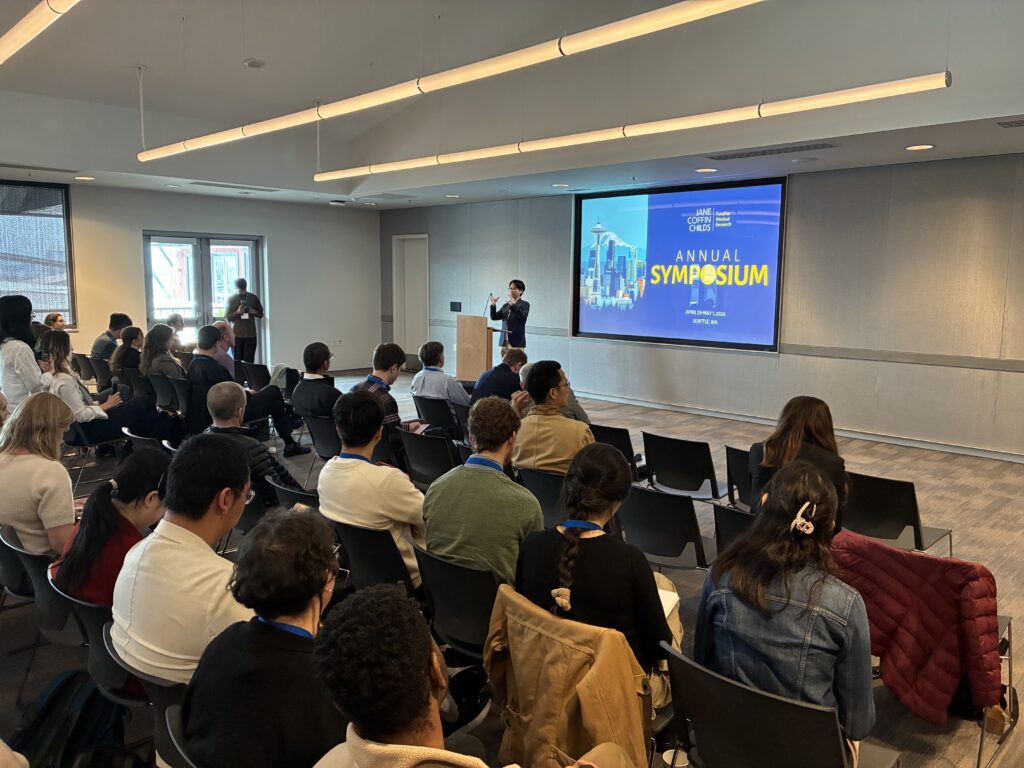
Dr. Honglue Shi conducts the Q&A following his presentation.
Alum Presentation
Dr. Monica Guo, Assistant Professor at the University of Washington and Class of 2015 JCC Fellow wrapped up the symposium with an overview of her research and her transition from JCC fellow to independent investigator. Guo and her lab investigate the role of structural proteins in organizing the genome for important processes such as DNA replication, transcription, and segregation.
For example, during each genome replication in bacteria the DNA is cut approximately 200,000 times, and then faithfully stitched back together. One could think about this problem like having to pack a telephone cord (remember those?) as tall as the Sears Tower into the size of a tennis ball. That would be one tangled cord – no wonder so many cuts are needed to disentangle the DNA when it is needed for different functions.
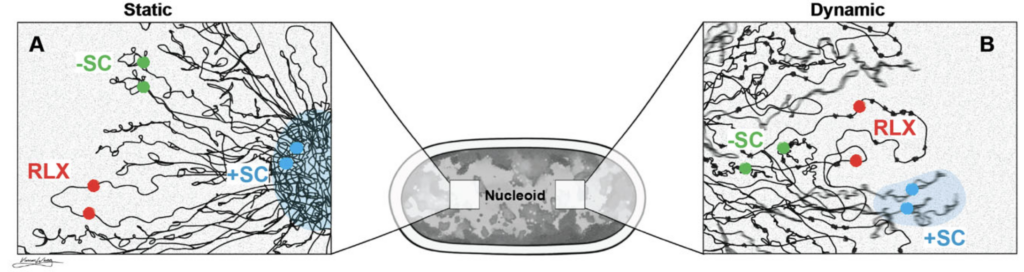
Model for bacterial chromosome organization from Fu et al, 2024
Recently the JCC Annual Symposium has rotated through different cities around the United States, in part to connect with as many JCC alumni as possible. Next year, we travel back to the East Coast and head up to Boston on May 5-7th, 2027. If you’re a JCC alum in the Boston area, we’d love to see you there!